The instinct on a hotel shoot is to fill the frame — get the bed, the view, the lamp, the flowers, all of it, in one shot. The films that feel expensive do the opposite. They leave room.
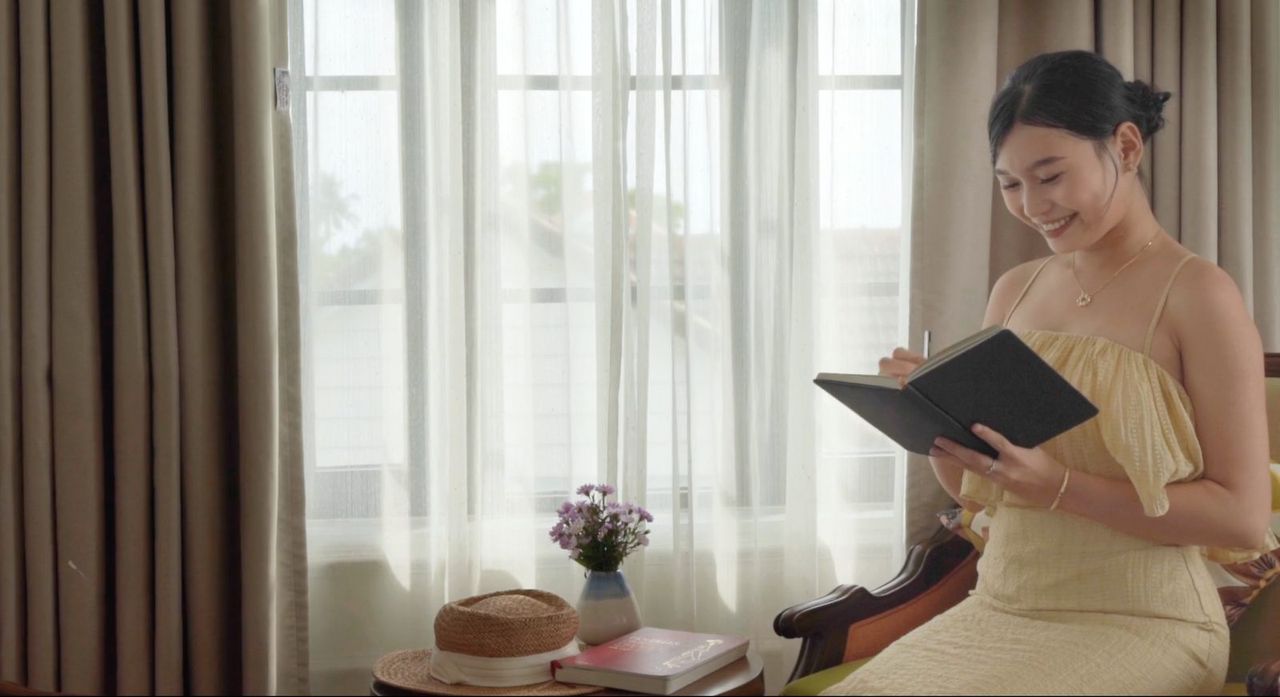
Negative space — the quiet, empty part of a frame — isn’t wasted space. It’s what lets the eye travel, and it’s one of the clearest signals of calm and quality a camera can give. A crowded frame reads as cheap and anxious. An uncrowded one reads as considered, which is exactly how a guest wants their stay to feel.
What the empty part does
When a single element — an armchair, an arch, a figure at a window — sits in open space, the eye knows where to land. The composition does the thinking for the viewer. Pile three competing subjects into the same shot and the eye bounces between them, takes in nothing, and moves on. Less in the frame almost always means more in the mind.
Where it earns its place
Architecture loves it: a close crop of one detail against a plain wall says more about a building than a shot trying to fit the whole façade in. Rooms love it: a made bed with space around it reads luxurious; the same bed crammed edge-to-edge with the rest of the room reads like a listing photo. By a pool or a view, the emptiness is the product — the room to breathe is the thing you’re selling.
The discipline of leaving things out
Getting there is mostly subtraction. Every object in a frame should be there for a reason; anything that isn’t is visual noise that interferes with the read. Before a shot is locked, the question is rarely “what else can we add?” It’s “what can come out?” That’s harder than it sounds, because the temptation to prove value by showing everything is strong. The discipline is trusting that one clean idea beats five competing ones.
It’s a pacing tool too
Negative space isn’t only about what’s in the frame — it’s about time. In a film, holding a quiet shot a beat longer than feels comfortable gives it the same room a still composition needs. Cut too fast and even beautiful frames feel restless. The pauses are where a hotel film earns its sense of calm.
Done well, restraint is the most cinematic choice available — and it costs nothing but the confidence to leave things out. You can see how that plays across our films.